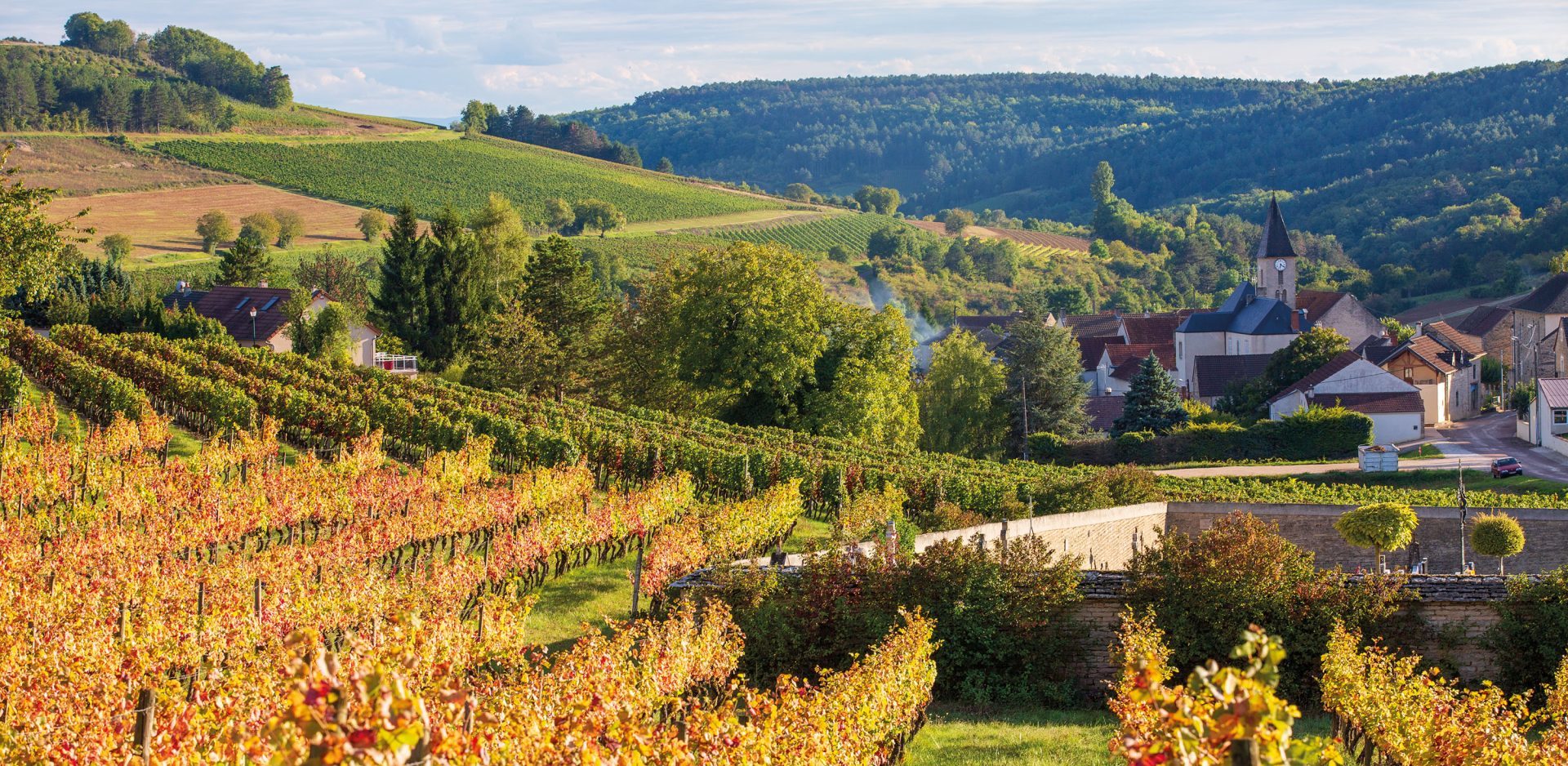
This wine region stretches across a fragmented territory clinging to the foothills of the Massif Central. Here, the landscape is defined by chaillées , dry-stone walls inherited from ancestral know-how, which tame the terrain while combating erosion. At a glance, the demanding nature of this vineyard is evident: the vines, primarily cultivated on terraces, cling to slopes that can incline up to 50% and reach altitudes of up to 300 meters. Given this spectacular topography, it is no wonder that some of these hillsides are called " heroic vineyards . "
This mosaic of vineyards is historically structured into two main groups: in the north, the Côte-Rôtie and Condrieu appellations, Château -Grillet and the northern sector of Saint-Joseph; to the south, Hermitage, Crozes-Hermitage, Cornas, Saint-Péray, and the southern sector of Saint-Joseph. Although representing only 10% of Rhône production, these crus remain among the most prized. Syrah reigns supreme for the reds, while in blanc Viognier, Marsanne, and Roussanne share the top spots. The climate, meanwhile, varies considerably. Cooler and more continental in Vienne, it gradually warms up towards Valence, even taking on Mediterranean characteristics. The vineyards are mostly situated on a granite base. However, granite is not the only rock. In Côte-Rôtie, for example, it coexists with gneiss and schist, while further south, towards Crozes-Hermitage, the rounded pebbles, remnants of the Ice Age deposited by the Rhône These features are also part of the landscape. This geological diversity shapes the unique expression of each vintage, imprinting the wine with the mark of its terroir. But has this renowned vineyard always enjoyed such a smooth and peaceful history?