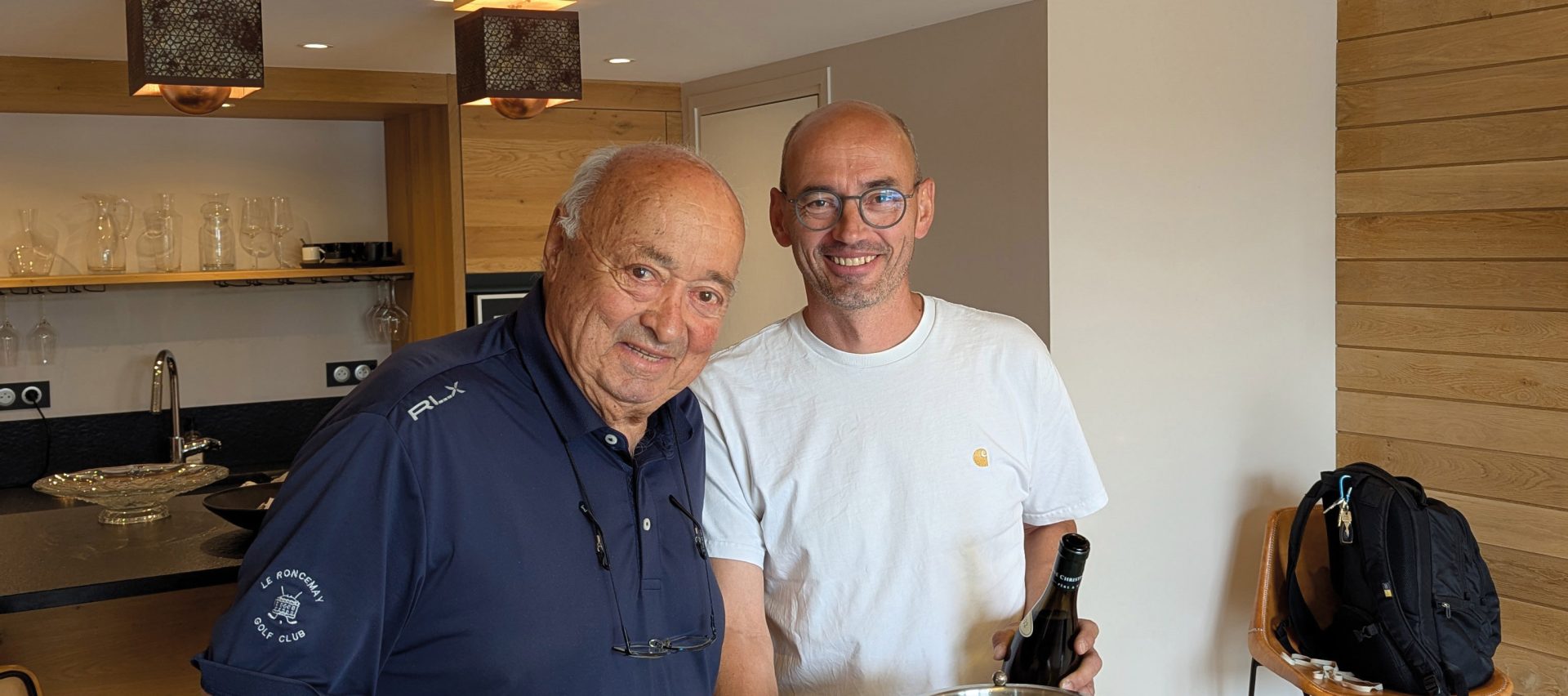
Jacques Devauges transferred to Clos of the Lambrays !
by
Christophe TUPINIER
THE
Poor Ricardo only lasted five months! Arriving in September 2018 as the savior destined to turn around the Girondins de Bordeaux football club, he has already been "let go." Five months… In football, results must be immediate, and people aren't expected to prove themselves for very long. Fine, but what does that have to do with Burgundy? Nothing, except that it would seem—let's use the conditional tense—that the billionaires who invest in the vineyards bring not only tens, or even hundreds, of millions of euros, but also a more radical approach to human resources management… unless this is just another episode in the rivalry between François Pinault and Bernard Arnault. Let's take a closer look…
Indeed, we learned a few weeks ago that Jacques Devauges was going to leave his position as stage manager at Clos of Tart , in Morey-Saint-Denis, less than a year after the effective acquisition of the domaine by the Pinault family; Jacques Devauges held the position from 2011 to the end of 2014 at domaine de l'Arlot (Premeaux-Prissey) had arrived on January 2, 2015 at Domaine of Clos of Tart where he had succeeded Sylvain Pitiot, who had been in the position since 1996. During his short time at Clos of Tart Jacques Devauges still managed to initiate the certification process as early as 2015. Clos in organic viticulture (with Ecocert), official certification since the 2018 vintage; following this, the conversion to biodynamic farming began in 2017 (with Biodyvin) and will be effective for the 2020 vintage. Jacques Devauges will therefore take up his duties this Friday, March 1st at domaine of the Lambrays , owner with a near-monopoly on grand cru Clos of the Lambrays (a wall separates the Clos of Tart of Clos of the Lambrays ), owned since 2014 by Bernard Arnault. He will replace Boris Champy, a young oenologist from Champagne, who has been managing the forty-eight hectares of the estate since 2008. domaine Burgundian of the maison Louis Latour, from Beaune, arrived in June 2017 with solid experience in Lambrays to succeed Thierry Brouin (in the position since… 1980) with a comprehensive mission: technical, management, communication, and commercial. A ruthless world, and ultimately quite far removed from the spirit of Burgundy wine, where not everyone is always "nice and kind"—let's avoid naive idealism—but where patience remains a true value; where competent people are generally given the time to settle in, to understand the terroirs they are dealing with, in short, the time to take charge. In conclusion, we cannot resist sharing these few lines from the "Meet the Chef" section published in issue 145 of Bourgogne Aujourd'hui, dedicated to Olivier Pion, a wine merchant from a long line of winemakers for 70 years and a connoisseur of both the French and export markets: "Burgundy has an image of family estates, and this family dimension is now severely disrupted by the rising prices of vineyard land. This is very dangerous." Burgundy could change hands! If that happened, it would lose its identity, its soul, and enter, like so many other regions, a more impersonal, marketing-driven era where the sole objective of estates would be maximum profitability, at the expense of value creation. Abundant money as the only rule has its limits, and we're straying from the subject of wine! Prophetic?