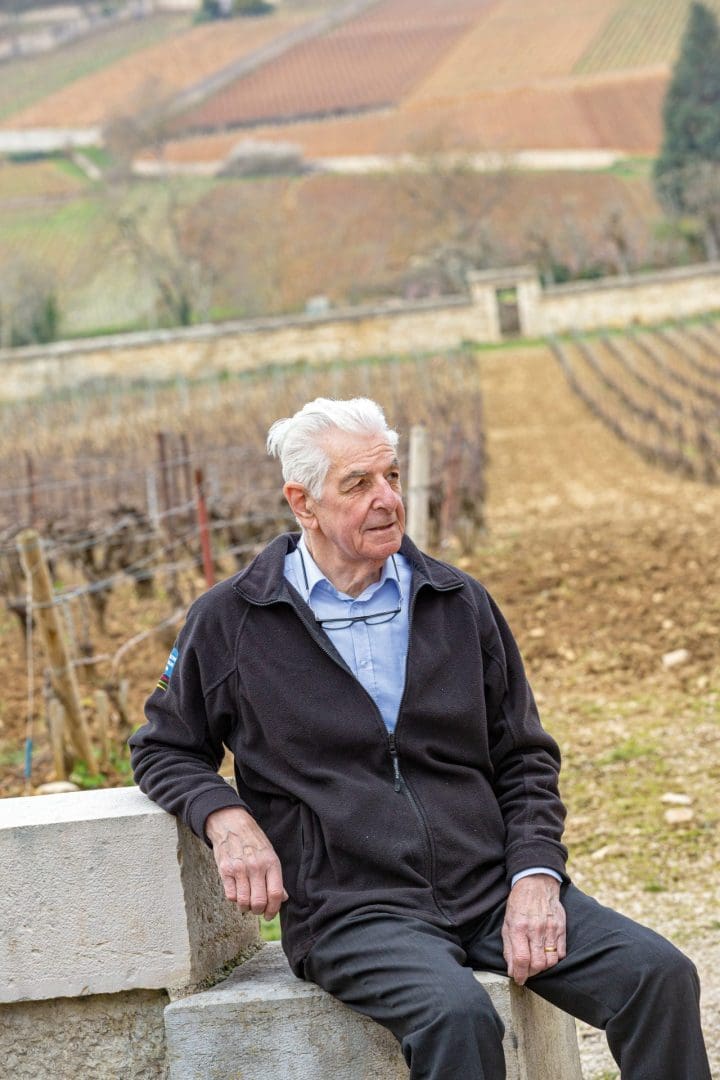
Michel Bardet and his children Claire and Henri Marc Bardet
Estates and Houses
Michel Bardet, goalkeeper of the Clos of the Perrières has passed away
Figure of Meursault , Michel Bardet, co-owner of the Domaine Albert Grivault died on December 5th at the age of 87. Bourgogne Aujourd'hui had dedicated a feature to him. domaine in 2019, on the occasion of the 140th anniversary of the acquisition of its monopoly meursault premier cru Clos of the Perrières , with a "historic" tasting.
by
Christophe TUPINIER
THE
Find the article and tasting notes below, published in issue 147 (July 2019) of Bourgogne Aujourd'hui.
Keeping the flame alive
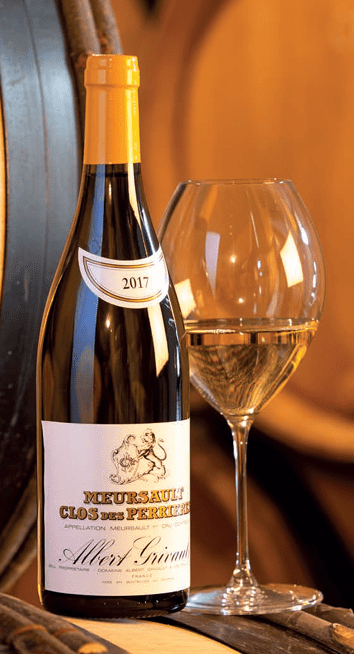
This year, Domaine Grivault celebrates the 140th anniversary of its acquisition of the Clos Perrières meursault premier cru monopoly. A gem in the heart of the chardonnay finest terroirs.
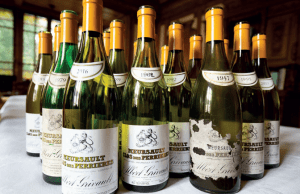
THE Domaine Albert Grivault, to Meursault had celebrated the 120th anniversary of Albert Grivault's acquisition, in 1979, in the midst of the phylloxera crisis, of his meursault premier cru Clos of the Perrières monopoly; it keeps the flame alive by celebrating its 140th anniversary this year. The "flame," but what flame exactly? A culture of great, age-worthy white wines, an ancient family heritage, a certain conception of Burgundy perhaps a little old-fashioned but deeply rooted in its origins? The flame, too, which has never gone out, and Michel Bardet, 81, readily admits, hopes to one day see his Clos of the Perrières classified as grand cru “No new cases are currently underway, but we are calmly maintaining the pressure” (see box below). “At Meursault , THE Perrières are the best plot and the wine comes from the heart of this cru, The Clos of the Perrières "It stands up to the incomparable Montrachet," wrote Alexis Lichine in his Encyclopedia of Wines and Spirits of All Countries , who in the 1950s actively participated in launching the vogue for great white Burgundy wines.
Property of the Bardet and Chevignard families (of Beaune ), THE domaine covers 6 hectares, of which 5.1 chardonnay , with its crown jewel: the monopoly of Clos of the Perrières , an enclave and a AOC a separate plot of 94 ares 52 centiares in Les Perrières -Below. The management of the operating company was entrusted in 2004 to Claire Bardet, assisted by her brother Henri Marc, with a father, Michel Bardet, still very involved at the age of 81.
The vines are cultivated using sustainable viticulture methods by three winegrowers responsible for manual labor, trimming, and plowing; treatments are carried out by a winegrower from Meursault. After a relatively early harvest, which begins about five days after the first harvests in Meursault, vinification and aging are carried out using traditional methods: in oak barrels (20% new wood) for around ten months, in cellars temperature-controlled by the ground so that fermentation is complete before Christmas, followed by a month in vats to ensure true homogeneity of each cuvée bottling in the second half of August. There is nothing extraordinary about any of this, and if the wines (see following pages) stand the test of time so brilliantly, it is first and foremost thanks to the quality of the terroir.
Grand cru A day ?
The story behind Clos Perrières grand cru classification grand cru rich in lessons. In August 1992, on her 100th birthday, Mathilde Bardet, Michel's mother, signed an application for grand cru status grand cru Clos Perrières, which was initially very well received. A vote taken on March 30, 1993, by the owners of Perrières the basis of "one ouvrée"* resulted in a clear outcome: 176 yes and 33 no, out of a total of 209 votes cast. A new vote held three years later, on January 15, 1996, in the presence of the twenty-six owners (at the time) of Perrières a completely different balance of power, with only a third still in favor of the classification. The central and somewhat questionable argument put forward by the wine syndicate and INAO the fear of "an inflation of similar requests, whether for Perrières or other Meursault premiers crus", wrote Pascal Laville, head of the INAO center in Dijon, on January 18, 1996. Everyone has their reasons, but isn't the most regrettable thing in all this that a village Meursault still doesn't have a grand cru? It seems to us that there would be nothing incongruous about Le Clos Perrières becoming grand crus, at the very least.
Domaine of approximately 6 hectares, of which 5.1 are chardonnay .
Owners : Bardet and Chevignard family.
Manager : Claire Bardet, since 2004.
Five appellations: meursault premier cru white Clos Perrières (94.52 acres), meursault premier cru white Perrières 1 hectare 54 acres 59),village white Clos Murger (1 hectare 65 acres 65), Bourgogne white Clos Murger (93 acres), pommard premier cru red Clos Blanc 89 ares).
The tasting
90 years of Clos of the Perrières
2017, 1928... Honestly, in thirty years of Bourgogne Aujourd'hui, how many times have we had the opportunity to conduct such a comprehensive and impressive vertical tasting? Very few, and the last one was twenty years ago for... Le Clos Perrières alresdy. An event and a plea for the aging of great white Burgundy wines.
2017 –20 (100)
Beautiful bright, clear, golden-green color. Pure, delicate aromas with empyreumatic, menthy, fruity notes: vine peach, white peach. The palate is quite smooth and rich, while retaining elegance and good balance, with a salty finish. Great potential!
2016 –20 (100)
Note that The Clos of the Perrières It escaped frost in 2016… Golden, brilliant robe. The nose is more open than the 2017, a touch more "sunny" too, with sweet flowers and yellow fruits; candied citrus notes emerge with aeration. On the palate, the wine expresses itself in terms of richness and power, "a very rich and powerful flavor profile, nourishing with a very accomplished maturity and great potential. A very fine expression of the terroir," concludes Véronique Girard, oenologist (see "Tasting" box).
2015 –20 (100)
Surprisingly, this 2015 is almost less expressive, less "sunny" than the 2016. On the nose, it retains an ethereal quality with notes of white flowers, lemon tart, and fresh butter. The wine is rich (it is a 2015, after all), with a juicy, chiseled character. It is at once rich, luscious, elegant, and taut. Great potential here too.
2013 –20 (100)
A clear, brilliant, golden-green robe. We're taking a step down from previous vintages, arriving in a fresher, more northern style, with fleeting notes of citrus, flowers, and toast. Medium-bodied on the palate, with the nobility of the terroir, purity, and a beautiful length. It's worth noting that this wine divided the audience, with some, like Martial Jacquey and Jérôme Prince, praising its classicism and purity.
2008 –20 (100)
A beautiful, brilliant golden robe. A fragrant nose, both ripe and fresh, with notes of spice, pastry cream, apricot jam, and a very pleasant "sweet" note, linked to the presence of some botrytized grapes at harvest. A superb palate, rich, juicy, and taut, with lemony flavors. It is at once luscious, substantial, and vibrant. An almost nourishing wine!
2006 –20 (100)
Expressive, soft, elegant aromas of dried flowers, with a toasty note… The wine is typical of the 2006 vintage: tender, mellow, full-bodied, refined, and with depth. One might spontaneously be inclined to enjoy it now and wonder about its aging potential. Not Georges Pertuiset, France's best sommelier: "The evolution is slow and harmonious. I think it can still be kept for ten years."
2005 –20 (100)
Brilliant golden robe. The wine is a little closed, it needs air, and gradually warm notes of spice, yellow fruit, and chestnut cream emerge… 2005 was a dry vintage, with thick-skinned grapes that lacked juice, and the wine is still compact, a little tight, but very young and well-balanced. “Be careful, this is one of those tricky vintages that needs time to open up,” warns oenologist Bruno Huguenin.
2003 –20 (100)
A beautiful, flattering nose, soft and expressive, with aromas of yellow fruit and spice… reflecting a serene, accomplished maturity, without excessive exuberance in such a scorching vintage. A different observation on the palate, with a wine at its peak, slightly jammy, still pleasant, but no longer quite in tune with the character of the terroir.
2001 –20 (100)
A beautiful, bright golden robe. An open nose, perfumed by the presence of botrytized grapes which have imparted a kind of aromatic sweetness reminiscent of a dessert wine: jammy yellow fruits, honey, spices, roasted peach, date… The wine is delicious, both flavorful and fresh, long, and wonderfully indulgent while remaining juicy and precise. “I love the wine’s fullness, its openness. I almost drank it all…” commented Julien Wallerand.
1999 –20 (100)
Clear robe, with golden, amber notes. Beautifully evolved aromas of spices and honey. Burgundy produced a lot in 1999 and the wine therefore lacks the body, depth, and class of the great vintages, but it is pleasant, elegant, smooth, flavorful, ethereal, and without a doubt would be the perfect companion to a fine fish or some shellfish.
A studious and fascinating exchange
The tasting took place on April 10, 2019 at Domaine Albert Grivault, at Meursault Michel Bardet and his children, Claire and Henri-Marc, had invited several people to a tasting that turned into a studious and fascinating exchange. The wines were tasted from youngest to oldest, specifying for each vintage the age of the vines, which has changed considerably. Clos The La Perrière vineyard was indeed completely uprooted and then replanted in 1889 and 1944. In the 1980s, it was uprooted and then replanted in two phases: 1983 and 1986 for the northern half, and 1985 and 1989 for the southern half. Given the evolution of the wine trade and demand, future uprootings will likely be carried out in quarters or fifths.
Tasting panel: Gérémy Gateau (wine merchant, Vinoboam, Beaune), Thierry Gaudillère (Bourgogne Aujourd’hui), Véronique Girard (oenologist, Centre Œnologique de Bourgogne, Beaune), Éric Goettelmann (head sommelier at Bernard Loiseau, MOF), Brigitte Houdeline (École des Vins de Bourgogne, Beaune), Bruno Huguenin (oenologist, Centre Œnologique de Bourgogne, Beaune), Martial Jacquey (wine tasting club, Le Nez de Saint-Pierre, Dijon), Georges Pertuiset (France's best sommelier), Jérôme Prince (president of the French and Burgundy wine brokers), Julien Wallerand (wine merchant, Le Caveau de Puligny-Montrachet).
Other wines tasted: 1995 (13.5), 1989 (13.5).
1996 –20 (100)
This was a vintage that required careful management. The very high natural acidity meant waiting for the grapes to ripen fully to achieve balance and... domaine has clearly succeeded. A deep, complex, rich and fresh nose of citrus, exotic fruits (pineapple), menthol, spices, and toasted hazelnut… A superb, rich palate, revealing ripe fruit, with tension, length, purity, and elegance. “I am amazed by the youthfulness of this 1996, which has aged remarkably well and possesses exceptional class,” enthuses sommelier Éric Goettelmann.
1992 –20 (100)
After the uprootings of 1983 and 1985, 1992 was the first year in which the entire production of the clos But with a very young vine… Talent clearly doesn't wait for age, as demonstrated by this exceptional wine in a vintage that is, admittedly, highly regarded. chardonnay Rich, expressive, refined, and precise aromas of candied yellow fruits, exotic fruits (pineapple, mango), saffron, toast, and custard… A concentrated yet ethereal palate, with a luscious, sweet, generous, and sunny character, without a hint of heaviness. A pure delight and truly elegant!
1986 –20 (100)
On oublie trop souvent la part prise par le < I > botrytis < I > dans l’évolution très agréable de nombreux millésimes de blanc en Bourgogne. Nouvelle illustration avec ce délicieux 1986, aux arômes rôtis de fruits confits, de miel, d’épices, de grillé, de banane flambée… Le vin est encore très jeune, à la fois « sucré » et frais, savoureux et précis, le tout avec une belle longueur et beaucoup d’élégance.
1985 –20 (100)
A warm year, 1985 marked the renewal of Burgundy… The wine is a light, brilliant gold, still very youthful. On the nose, the warmth of the vintage is expressed with great delicacy, without exuberance, in notes of candied fruit, saffron, toasted almond, and Bourbon vanilla… The palate is sublime, very rich, full-bodied, and juicy, with fruity flavors that are both sweet and tangy, great persistence, and a lot of class.
1979 –20 (100)
The 94.52 ares of clos They produced nineteen barrels of wine in 1979, a feat never achieved since, and this abundant harvest translates on the palate into a taut, well-balanced, but somewhat light style. This demonstrates once again that Chardonnay does not tolerate overly generous yields as easily as some claim. However, for a 40-year-old wine, the result is pleasant but lacks a certain spark… The final verdict comes from Georges Pertuiset: “a good wine, but not memorable, which would benefit from decanting.”
1962 –20 (100)
The seventeen years since 1979 have transported us to another era, with sweet, evolved, and sun-drenched aromatic notes: honey, chestnut, candied chestnut, saffron, walnut… The wine evokes an old sherry, rich, spicy, sweet-dry, smoky, and toasty. Disconcerting but delicious.
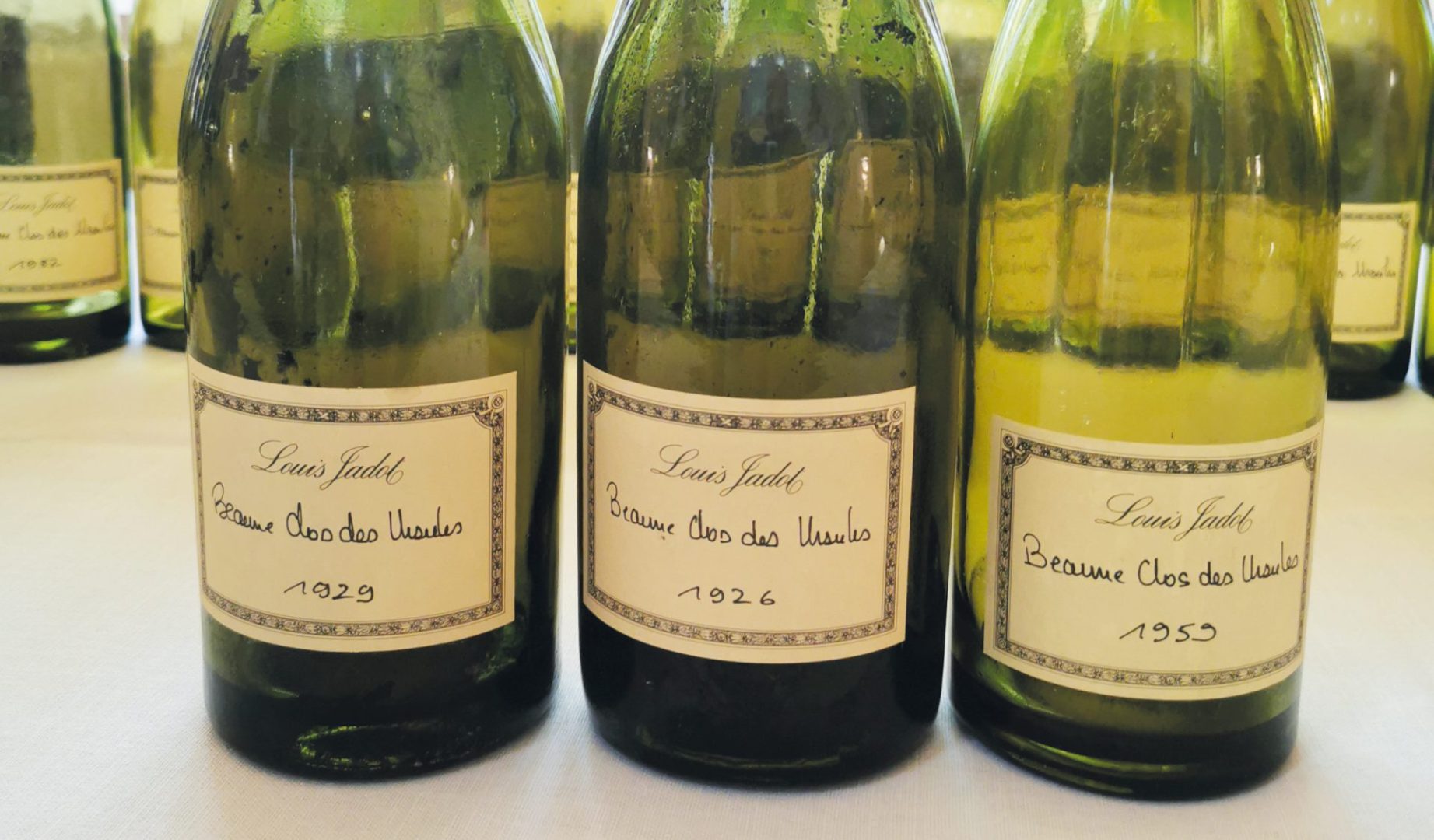
1959 –20 (100)
This is a "historic" vintage in Burgundy, notable for being as great in red as in white. Amber, topaz, brilliant color. Incredible nose combining aromas of saffron, curry, honey, apricot jam, caramel, roasted hazelnuts... Everyone will find something to their liking in this profusion of captivating aromas. The palate is sublime, concentrated, juicy, and precise: "honeyed flavors, a tertiary register that is at once oxidative, sweet, and generous. A nourishing and tempting wine. A memorable experience, an initiatory journey," enthuses Véronique Girard.
1947 –20 (100)
Tasting a 1947 and a 1959, two legendary vintages, just minutes apart, is not something we often experience. This 1947 is exactly where we expect it to be, right at the top, with an amber, mahogany hue… An intense nose of caramel, rum baba, flambéed banana, currants, and praline, complemented by a hint of truffle… The palate is elegant, rounded, and smooth; it's the famous "sweetness without sugar" described in these pages by Denis Dubourdieu, the great Bordeaux oenologist, now deceased. Paris-Brest, tarte tatin? A pastry…
1937 –20 (100)
The rating is somewhat ridiculous for such an old wine, especially considering the bottle effect, which can transform a sublime wine from one bottle to another. This 1937, with its almost brown hue, displays aromas of great complexity: curry, saffron, honey, chestnut, orange peel… The wine is delicate, precise, and simultaneously sweet, juicy, fresh, and refined.
1928 –20 (100)
The color is caramel, perhaps a little cloudy, so what? What a nose, even at over 90 years old, with subtle notes of honey, spices, chestnut, toast, coffee… The wine has more depth, substance, and flesh than the 1937, with great class, a tender, luscious, delicate, almost moving quality…
A clay soil The meursault premier cru Clos Perrières covers 94 ares 52 centiares in a single block and has been enclosed by walls since at least the 17th century, as evidenced by the style of the entrance gate. It is an enclave in Les Perrières, where the domaine also has 1.55 hectares in two parcels: ten ares against the south wall of the clos, and 1.45 hectares in a single block, about 70 meters north of the clos. In this lower part of Perrières, the slope is gentle and faces southeast. Soil analyses carried out in 1985 in the Clos Perrières and in the large Perrières plot revealed some fairly significant differences. The clos of 46% clay, 30% fine and coarse silt, and 24% sand, with fairly deep soil of at least one meter. "This is quite unusual in the area and probably linked to some ancient deposits from the adjacent quarries," suggests Michel Bardet. The soil of the "classic" Perrières consists of 35% clay, 35% silt, and 30% sand. The higher proportion of clay in the clos explain this opulence, which is not found in the estate's Perrières .