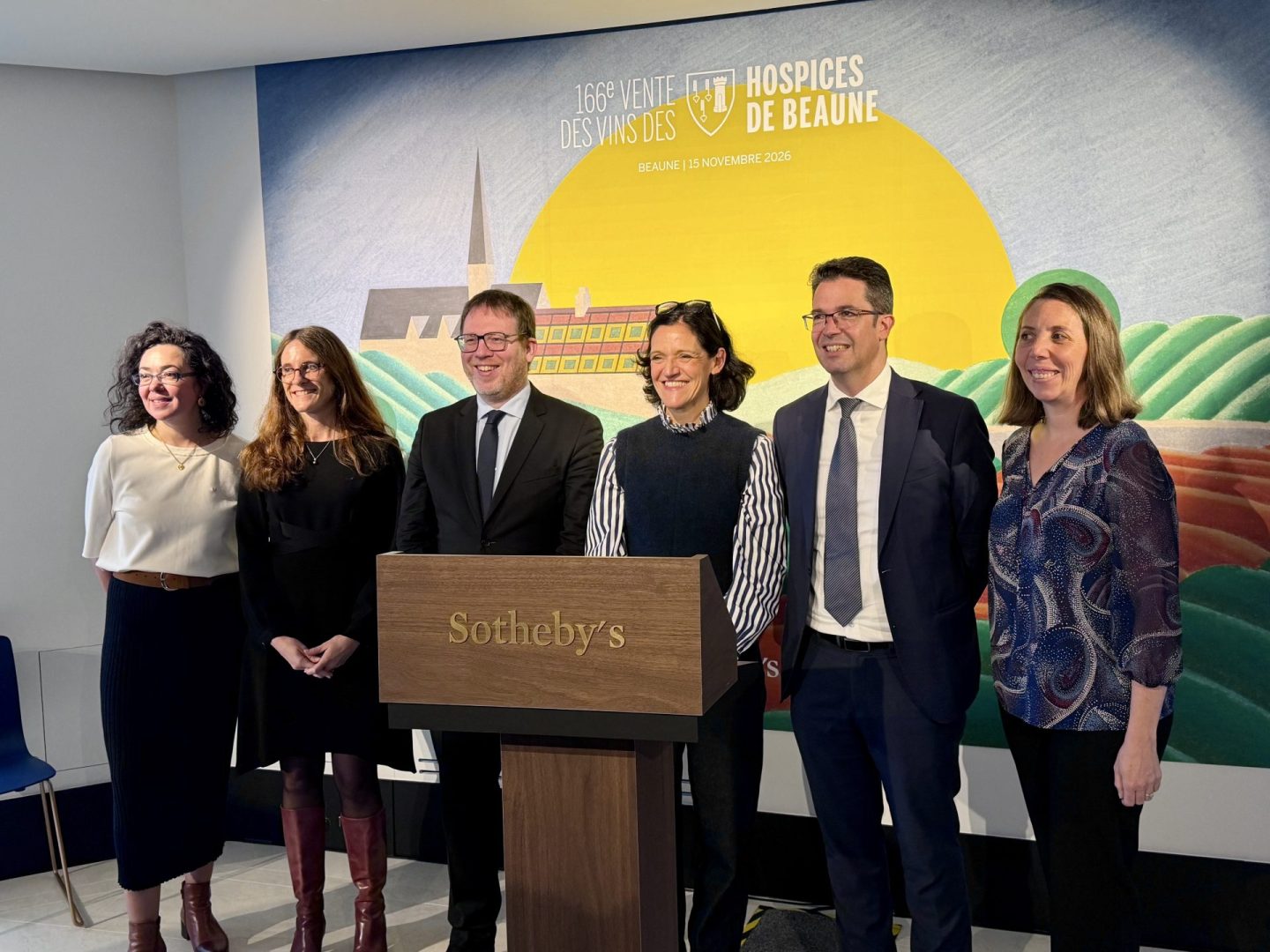
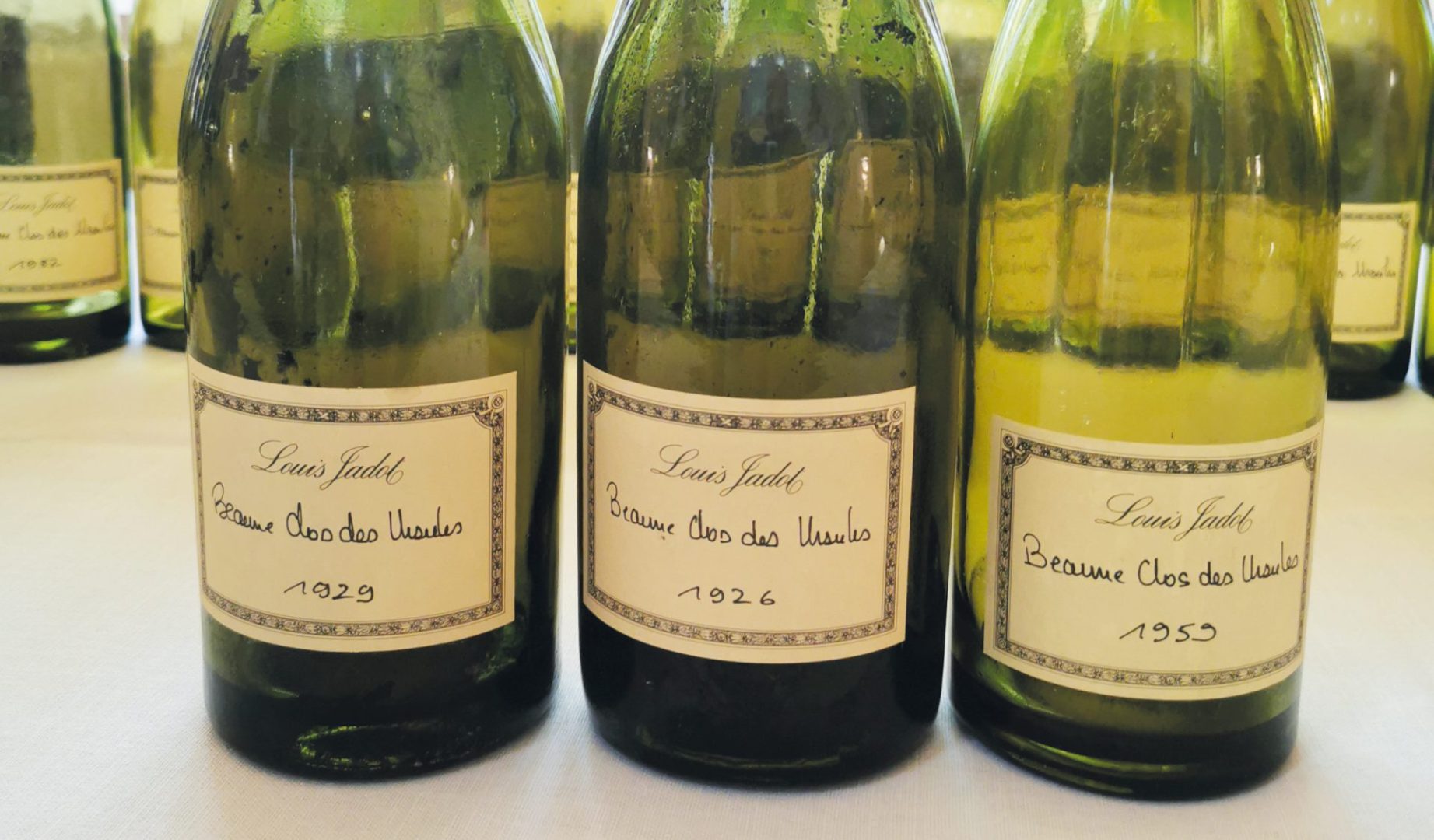
One of the most striking phenomena of the last twenty-five years has been the feminization of the wine world. More and more women are taking over family estates or holding positions of responsibility in wine merchants and producers. They are also making their mark in the fields of sommelierie and oenology.
by
Elisabeth PONAVOY
THE
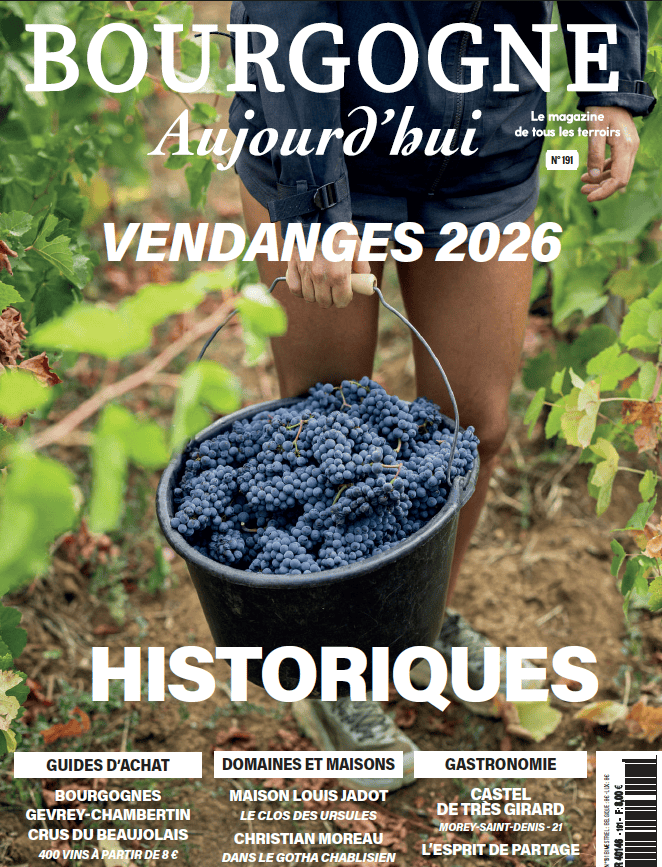
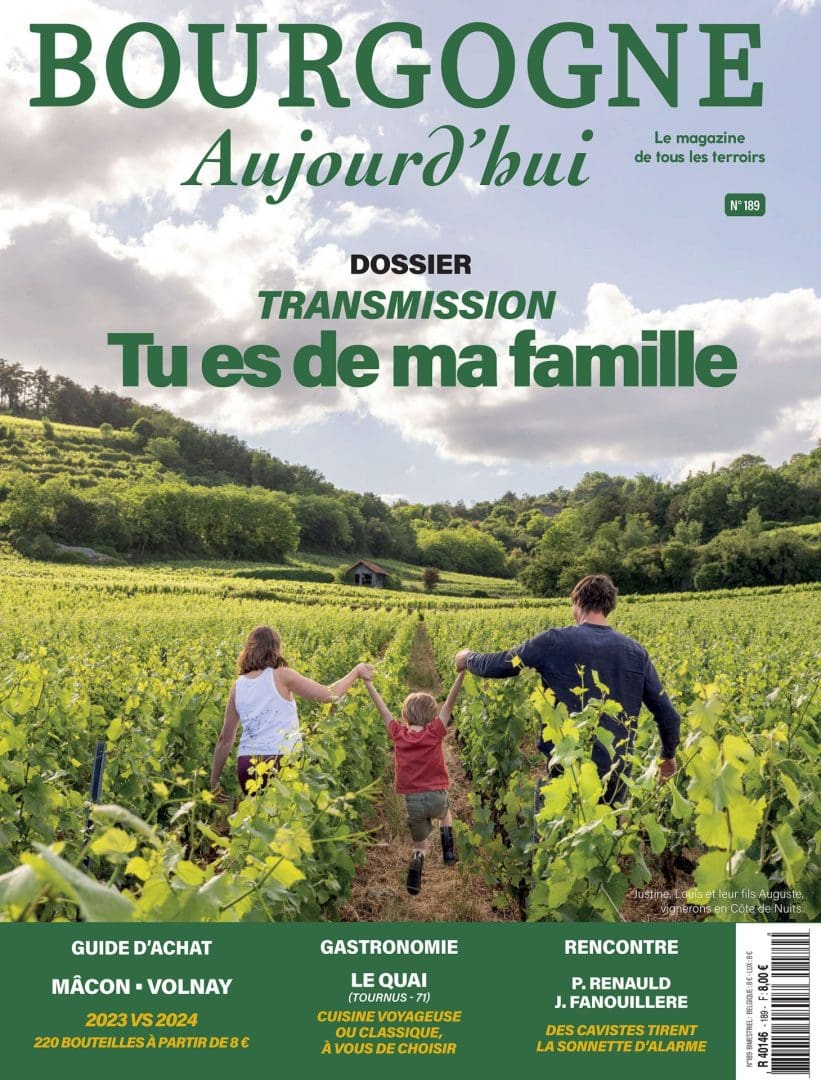
In 2019, Bourgogne Aujourd'hui celebrated its 25th anniversary with a "special" issue, dedicated to this quarter of a century which has changed everything in Burgundy and first and foremost with the arrival of women in charge.
In the first issue of Bourgogne Aujourd'hui, published in December 1994, the presence of women was limited to a single photograph taken at the Hospices de Bourgogne Wine Auction. Beaune In issue number 50, dated February 2003, eight of them were part of the jury of some forty tasters and were featured among the highlighted estates. These were specifically Martine Barraud, Nathalie Saumaize and Armelle Rion, posing alongside their husbands. In June 2011, for issue number 100, a short article commemorates the tenth anniversary of the Women and Wines of Burgundy association, and about ten women are featured throughout the pages of this special vintage issue… Nadine Gublin, a well-known and respected oenologist in Burgundy, is one of the pioneers. Originally from the Aube region, she stumbled into the world of wine by chance. “After a science-focused baccalaureate, I started a preparatory course in advanced mathematics in Reims. Seeing that I might not finish, the director called me in and directed me towards oenology studies, which were then in their infancy. Michel Feuillat was just arriving at the University Institute of Vine and Wine in Dijon And in 1977, I decided to enroll in the National Diploma of Oenology program. There were five of us female students in a class of about thirty.” Today, the situation has changed considerably, as Marielle Adrian, the director of the IUVV, explains. “The student body has become more female over time, with generally balanced proportions of girls and boys, although these can still vary from year to year in certain programs.” In 2016, for example, two-thirds of the first-year students in the National Diploma of Oenology program were female, and half in 2018. In the Bachelor of Science in Vine Sciences, male students remain in the majority, while in the Master 2 program in Vine, Wine, and Terroir, the student body is more balanced.
A gentle evolution
A 1979 graduate, Nadine Gublin honed her skills in a laboratory in the Mâconnais region for three years. "It was an excellent training ground, with exposure to every possible scenario and numerous contracts in the Beaujolais and the Mâconnais region.” In 1982, she joined the Maison Antonin Rodet to Mercurey who was looking for a second oenologist, goes through the Château of Rully , before settling in 1989 in Meursault at Jacques Prieur's, where she would give her first performance in 1990 vinification Thirty years later, she still plays the role of consulting oenologist there, as well as for the owner's two other estates, the Labruyère family, in the Beaujolais and in Champagne. “When I started out, there were very few women in the wine industry. On family estates, they worked alongside their husbands. The evolution was gradual. I could have felt pressured as a woman, but I immediately loved my work and made myself available. Everything else happened naturally. I couldn't say whether being a woman is an advantage or a disadvantage. What I do know is that it's a profession where you have to be curious, attentive, and observant. Passing on knowledge is very important to me, which is why I regularly take on interns. I respond positively to whoever contacts me first, and it's true that there are more and more young women, some of whom are truly brilliant. The Nouveau Monde movement paved the way in this regard, in the years 1990-1995.” In Australia, California, and South Africa, women were already well-represented, and this opened the eyes of the Old World, which followed suit shortly before the year 2000.
A well-considered choice
In April 2018, we gave the floor to three female winemakers, members of the Women and Wine of Burgundy association, created in 2000 and now chaired by Nathalie Fèvre, a winemaker in Chablis , recently joined by her daughter Julie on the domaine Family. Sophie Cinier, Lorraine Senard, and Virginie Taupenot say they have chosen their professions, not those imposed upon them. In Lorraine Senard's family, her father was the only boy and had only one son. "It was understood that my brother would take over the family business." domaine Except that at 18, he left. That's when I started thinking about it." Sophie Cinier owes her passion for wine to her maternal grandfather. "He was quite a character, who shared so much with his seven grandchildren. There are five of us working in wine today, so you could say we fell into the pot, like Obelix! I love being in the vineyard and I'm also enjoying winemaking more and more. My father was a craftsman and my mother worked with him. When he retired, she often came to the vineyard with me. She's the one who taught me how to work, just as her father had taught her when she was young." The Women and Wines of Burgundy association took some time to find its place in the wine world. “At first, there was mockery, like ‘Look, there’s a wine women’s rights movement being created,’ but little by little recognition came,” recalls Virginie Taupenot. “In 2010, the Confrérie des Chevaliers du Tastevin "They asked us to give a presentation for the Roses chapter. They trusted us, without asking us to proofread our speech." "We simply want recognition of our place and our work in a field that was not originally female," explains Sophie Cinier.
An ambitious young generation
The feminization of the winemaking profession has accelerated with the arrival of a new generation. While women were already at the helm of some very fine estates in the 2000s (Alexandrine Roy in Gevrey, Marie-Laure and Marie-Anne Bouzereau has Meursault Ludivine Griveau at Corton -André before joining the Domaine Hospices of Beaune in 2015, and many others), those under 30 are now arriving in force: Amandine Renaud in Solutré-Pouilly, Clarisse and Anne-France Ramonet in Chassagne-Montrachet Mathilde Grivot in Vosne-Romanée, Aurélie Cheveau in Pouilly, the latter now even being president of the appellation Pouilly-Fuissé etc. They all have a solid background. This is particularly true of Amélie Berthaut, at Fixin , who embodies the young Burgundian generation at the helm of numerous family estates, after gaining experience through internships abroad. The young woman, however, was not initially destined for a career in winemaking. She studied agronomy, chose oenology as her specialization, and finally had her epiphany during an internship in Bandol, in a domaine a winery run by a woman. After a DNO (National Diploma of Oenology) in Bordeaux and internships in California and New Zealand, she settled in Fixin , in 2013. Installed in Marsannay Isabelle Collotte always knew she would be a winemaker. “I was an only child for seven years and I was always underfoot at my father’s feet. After middle school, it was obvious that I would go to the wine-growing high school in Beaune Women are also present in positions of responsibility in larger organizations, like Véronique Drouhin Francine Picard Nathalie Boisset or even Eve Faiveley Proof that the role of women in the world of Burgundy wines is only growing, the Wine Fair at the Cave des Climats in Paris, which at the end of September was dedicated to… Burgundian women winemakers! “Since the beginning of the Climats adventure, we have had the chance to meet wonderful women winemakers in Burgundy who particularly know how to highlight all the subtlety of the terroirs,” explain Denis Jamet and Carole Colin, the owners of the restaurant and the Climats wine cellar, in the 7th arrondissement of Paris. "In this still largely male-dominated world, we wanted to highlight their work and talent each year by dedicating our Wine Fair to them."
First MOF
Let's venture a little further into Burgundy to celebrate Pascaline Lepeltier, the first woman to be awarded the title of Meilleur Ouvrier de France (Best Craftsman of France) in the fall of 2018. In 2016, while working at restaurant Roots, in New York, she decided to enter the competition. And so began intensive training, which would last two years. "It was the diploma that interested me most; it goes far beyond scholarly technical skills, it also speaks a lot about passing on knowledge," the young woman confided to the women's magazine Glamour . She has never felt that being a female sommelier is a difficulty. "The problem of the lack of female representation exists, but it's structural, not particularly linked to the world of wine," she explains. "Like everywhere else, there are far fewer of us who reach the top of a company. The same goes for competitions, which require a lot of time and a significant personal investment. It's an area where the sommelier profession still needs to make progress." In Burgundy, as elsewhere, the train of feminization has well and truly left the station. Finally, let's acknowledge the recent creation of an association, bringing together about ten young female winemakers: Mi-filles Mi-raisins (Half-Girls, Half-Grapes). With the slogan "discreet but not secret", they intend to promote lesser-known appellations.