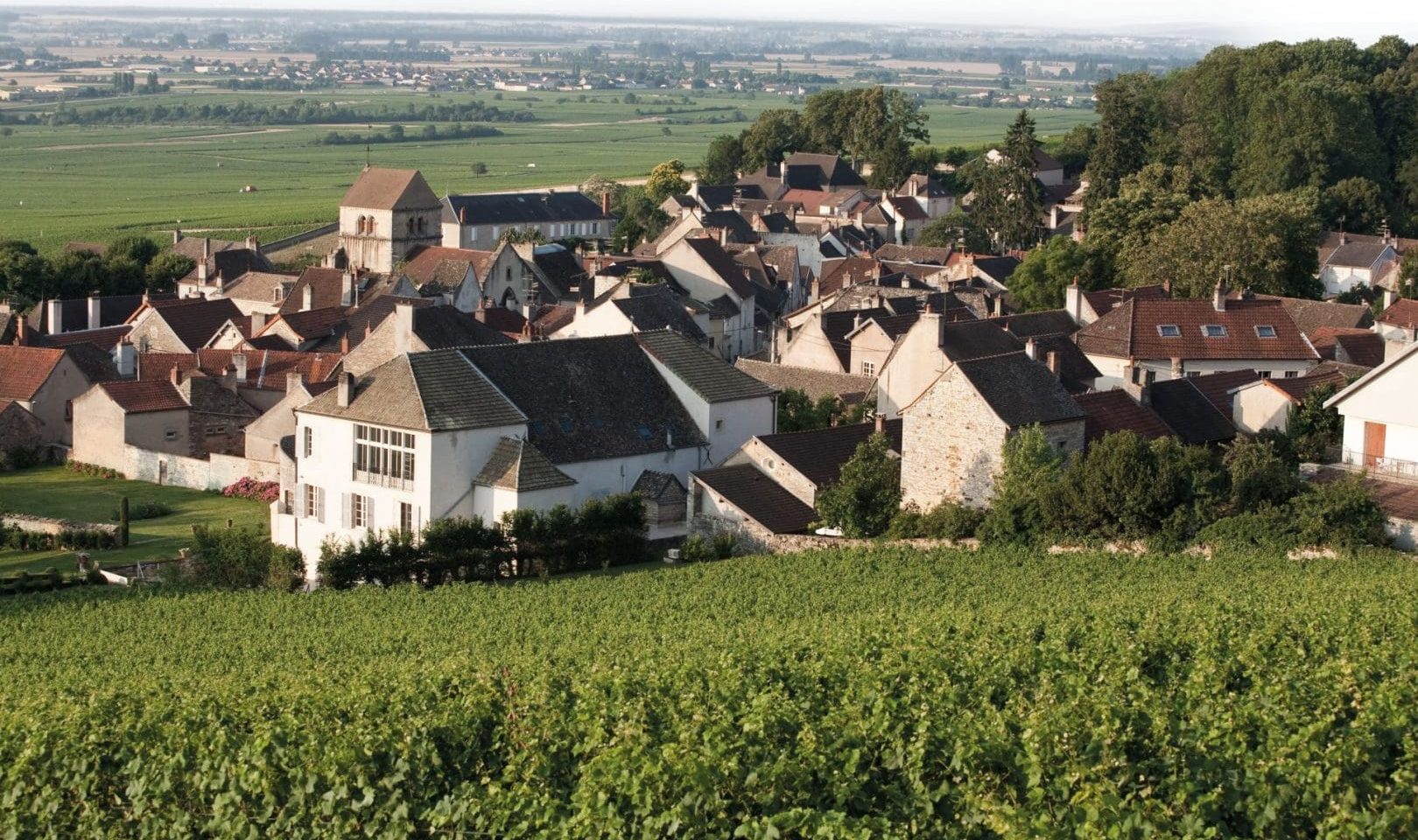
Thomas Bouley resumed the domaine family in 2002.

Jean-Marc and Thomas Bouley: an example of peasant common sense

We feel as though we've known Thomas Bouley since the very beginnings of Bourgogne Aujourd' hui in 1994, even though he has not yet blown out forty-five candles. As part of the generation we talk so much about in our pages and that has shaken things up, Thomas Bouley is unquestionably one of the winegrowers who are listened to and respected. An example, not to say a model....

With Thomas Bouley Once the cordial exchanges of welcome were over, our meeting immediately began with a tour of the vineyard bordering the domaine The idea was to exchange ideas on pruning, to scatter a handful of soil to illustrate well-aerated, living, and uncompacted soil, and to talk more broadly about agronomy, Thomas's top priority since 2002, the year he truly took charge of the... domaine family.

Thomas, 4th generation, succeeded Jean-Marc, his father, who arrived in 1974. "He invested his entire career in buildings and vineyards, to reach a surface area of seventeen hectares, then twelve in 2001 and seven when I took over in 2002 following the loss of five hectares under lease. Thanks to him, I inherited a fine heritage of vines and facilities in Volnay, where I was able to build the 100% stainless steel cuverie in 2016. This allows me to have everything in the same place and to work with enormous comfort," explains Thomas. Jean-Marc was already producing fine wines, with particular attention paid to controlling yields, taking care with his vinifications and his two-winter long maturations. "I don't rack any more, but I keep this logic of long ageing. It may seem paradoxical, but in softer vintages like 2021 or 2023, the second winter on the lees really fills out the wines, and conversely, in very concentrated, very ripe vintages like 2022, they become more refined". Thomas set up in business in 2002, but his father's health problems meant he was thrown into the deep end with the 2000 vintage. "My father had paralyzing sciatica. He was lying down, so I had no choice. I was 18. I made mistakes, that's how you learn, but I knew what I wanted and it was a good experience. Even though I made wine in 2000, I consider 2002 to be my first real vintage, as I was able to control everything in the vineyard by increasing the height of the pruning, completely stopping the use of chemical weedkillers, anti-rot treatments...".

Subscription
Digital

59,00 VAT included / year
111,00 VAT included every 2 years
More information
  • Immediate access to all online articles
  • Access to the digital version of all magazines available online (since April 2012)
  • Access to our entire database of tasting notes (45,000 wines to date).

1-year subscription: 6 issues (PDF in French) + news feed + tasting notes database

2-year subscription: 12 issues (PDF in French) + tasting notes database

Premium Offer

Subscription
Digital + Paper

79,00 VAT included / year
140,00 VAT included every 2 years
More information
  • Immediate access to all online articles
  • Access to the digital version of all magazines available online (since April 2012)
  • Access to our entire database of tasting notes (45,000 wines to date).
  • Home delivery of printed issues (in French only), 6 issues for 1 year / 12 issues for 2 years

1-year subscription: shipping included for France, €20 for other countries

2-year subscription: shipping included for France, €40 for other countries
Subscription
Paper

49,00 VAT included / year
88,00 VAT included every 2 years
49,00 VAT included / year
89,02 VAT included every 2 years
More information
  • Home delivery of printed issues (in French only), 6 issues for 1 year / 12 issues for 2 years

1-year subscription: shipping included for France, €20 for other countries

2-year subscription: shipping included for France, €40 for other countries


Other articles

AOC Saint Joseph © Bernard Favre.

Saint-Joseph : une trajectoire à flanc de coteau

Impossible de comprendre l’appellation Saint-Joseph sans lever les yeux. Depuis la rive droite du Rhône, elle se lit d’abord par le paysage : des coteaux granitiques vertigineux, des pieds de vigne conduits sur échalas, implantés sur d’étroites terrasses appelées chaillées, où la terre est retenue par des murets en pierres sèches. Ici, produire du vin relève […]