The "organic" boom: between progress and ambiguities!
by
Gilles TRIMAILLE
THE
With the temporary technical connection issues resolved (at least for now…), here is the continuation of the “25 Years” feature published in issue 149 of Bourgogne Aujourd’hui. Today’s focus is on the spectacular growth of organic viticulture.
Issue number 152 of the magazine will be available online starting next weekend. It will include buyer's guides on Chambolle- Musigny , THE Santenay , THE Maranges , a dossier on the "fundamentals of Burgundy", an article on the domaine “cult” Coche-Dury ( Meursault ), as well as a notebook of about thirty pages on the Beaujolais including a buyer's guide to the magnificent 2018 vintages and a vertical tasting of the Morgon Côte du Py by Jean-Marc Burgaud. Subscribe!
In the 1960s and 70s, a few pioneering winemakers decided to work the land and cultivate their vines without any chemicals, aiming to produce wines free of harmful residues. Each, in their own region, sometimes with the support of prominent figures in the scientific community, dedicated themselves to this challenging path, convinced that a new kind of viticulture was possible. At that time, the government showed no interest whatsoever in this type of production. It was only with the Agricultural Orientation Law of July 4, 1980, that the concept of "agriculture that does not use synthetic chemicals, either in fertilizers or in treatments for plant protection" emerged. Organic and biodynamic agriculture and viticulture were finally recognized.
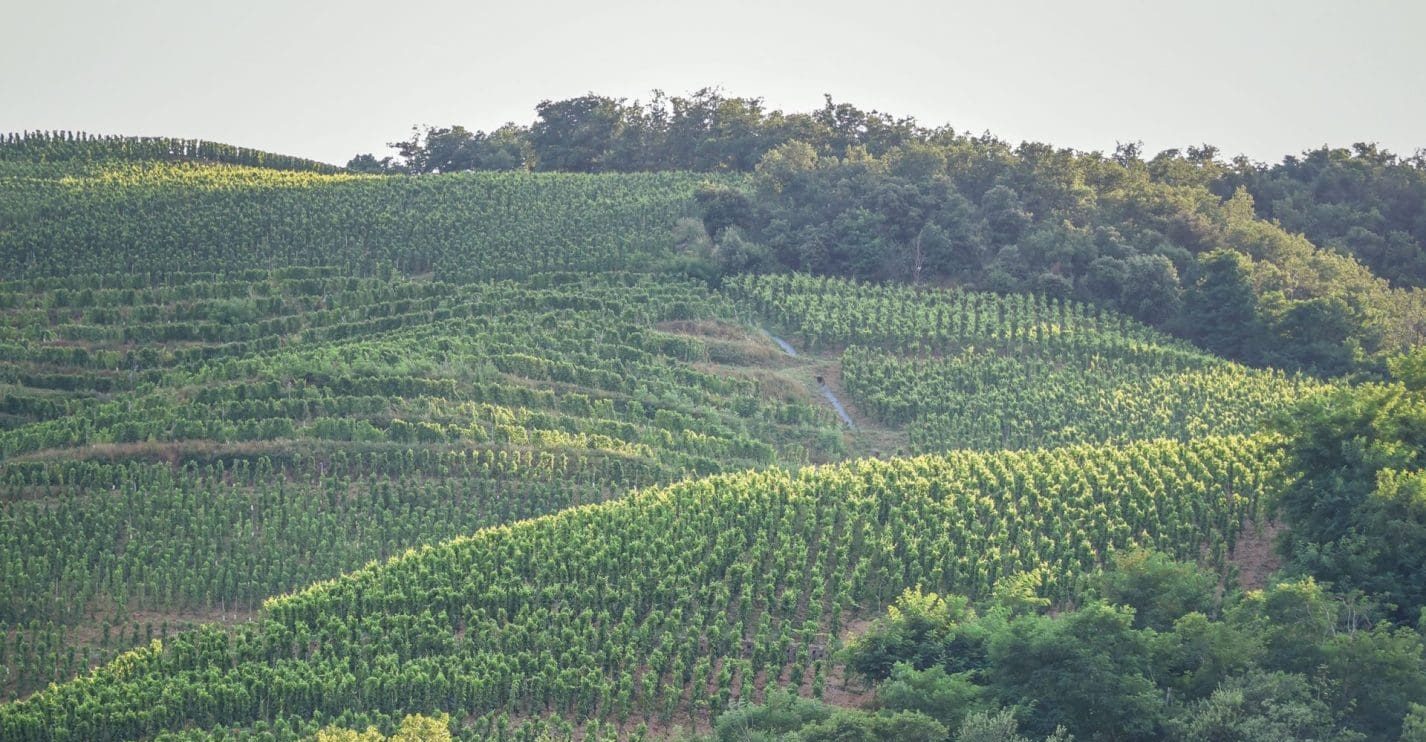
In 2019, 318 Burgundy farms, cultivating 2,437 hectares (out of just over 29,000 in total in Burgundy), were organically farmed, representing nearly 17% of the total vineyard area in Côte-d'Or, 4% in Saône-et-Loire and 6% in the Yonne There is therefore still significant room for improvement. Of course, organic viticulture requires more labor, more work, and it also generates higher costs, but the steady increase in wine prices has allowed many farms to make the switch.
Until August 1, 2012, only grapes were certified "organically grown"; but since that date, a European regulation has set new standards for the vinification can also be certified, in order to obtain the "organic wine" designation. Upon reading this text, we discover that the vinification Organic wines can use around forty additives and oenological aids, of organic or non-organic origin: gum arabic, silicon dioxide, copper citrate, wood chips, several types of gases, yeasts and enzymes, Aleppo pine resin, etc. (Annex IA of EC Regulation No. 606/2009). In the worst-case scenario, one could therefore find, under the European logo, a wine that has been yeasted, enzymatically treated, with the addition of diammonium phosphate or ammonium sulfate, centrifuged, enriched, electrodialyzed, and aged using oak chips, plus a few other oenological crutches. Fortunately, some of these practices are completely prohibited by decrees. appellation Burgundy wines are produced using organic methods, and one can hope that winemakers will not necessarily resort to these oenological techniques. Moreover, biodynamic wines are only permitted around twenty of these oenological aids. Ultimately, only the category of so-called "natural" wines, which is not yet officially recognized and rejects all these additives, may one day constitute "organic wine" in the strictest sense of the term. The concept of "organic wine" therefore still contains some ambiguities. It is hoped that in the future, the demands of winemakers and the vigilance of consumers will lead to improvements in viticulture and the quality of organic wines.